
| doi:10.3850/978-981-08-6218-3_SS-We032 |
 Final Paper PDF Final Paper PDF
|
CS-ASA: A COMPUTATIONAL SYSTEM FOR ADVANCED STATIC AND DYNAMIC ANALYSIS OF STEEL FRAMED STRUCTURES
A. R. D. Silva1,a, R. A. M. Silveira1,b, F. A. Neves1,c and W. G. Ferreira2
1Department of Civil Engineering, School of Mines, Federal University of Ouro Preto, Ouro Preto, Minas Gerais, Brazil.
aandreadiassilva@yahoo.com.br
bricardo@em.ufop.br
cfassis@em.ufop.br
2Department of Civil Engineering, Federal University of Espírito Santo Vitória, Espírito Santo, Brazil.
walnorio@gmail.com
EXTENDED ABSTRACT
A new computational tool for the advanced static and dynamic analysis of steel framed structures based on the Finite Element Method has been developed and is presented herein. Two sources of non-linearity are contemplated: the geometric, which considers the effects of structural displacements; and the physical, which considers the effects of the mechanical characteristics of the material used in civil constructions. Member material yielding and connection flexibility characterize the physical sources of nonlinear behavior. An evaluation of the static and dynamic stability of various structural systems, with rigid and semi-rigid connections, whose analytical or numerical solutions are found in literature is herein presented. This latter evaluation is used for validating the methodology and formulations developed by the authors and implemented in the computational system proposed.
1. INTRODUCTION
With the development of the civil, naval, oceanic and aeronautical industries, and the appearance of more resistant materials and new constructive techniques, in diverse problems of the structural mechanics, the nonlinear behavior of the systems begins to be relevant and should be considered in the analyses. As a consequence, engineering interest in designing lighter and more slender structures grows and the final structural system product becomes more competitive. Moreover, these lighter and more slender structures usually cannot be analyzed and designed without their dynamic effects also being considered. The unknown levels and characteristics of the dynamic response can lead to system failure during the cyclic loading application due to the accumulation of structural damages.
Therefore, with the changes of structural conceptions and requirements of more necessary verification of the behavior of the structures, nowadays there is an increasing search for computational systems with resources for nonlinear static and dynamic analyses.
A computational system for advanced structural analysis (CS-ASA) is presented. The main characteristic of the program is the accomplishment of the nonlinear static and dynamic analyses of steel plane framed structures. In these analyses, the geometric nonlinearity or second-order effects (P-Δ and P-δ) can be simulated; as well as those introduced by considering semi-rigid connections, and steel inelasticity. The introduction of all these nonlinear effects in the numerical models and formulations defines an Advanced Analysis. This methodology for the analysis and design of steel structures makes it possible to establish the stability and strength limit of the structural system in a direct manner, without the necessity of separate verification of each member’s capacity.
2. THE COMPUTATIONAL SYSTEM
Developed in Fortran 95/2003 language [9] and based on FEM, the CS-ASA performs the nonlinear static and dynamic analysis of steel framed structures. The three steps of the numerical simulation process (pre-processing, analysis and post-processing) are illustrated in Figure 1. Pre-processing consists in the numerical model definition (data file input). The data related with the model is then processed to obtain the structural results (nodal forces, nodal displacements, among others) that will be printed in text files (post-processing). The nonlinear effects simulated are also shown in Figure 1. Looking to provide different analysis options of the structural systems, several beam-column element formulations were adopted. The formulations implemented in CS-ASA for the simulation of the second-order, connections and inelasticity effects, referenced in Figure 1, are shown in Figure 2.
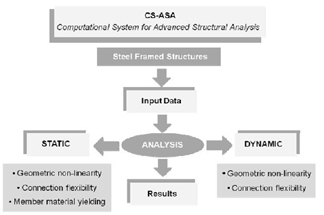
Figure 1: CS-ASA program: analysis and effects considered
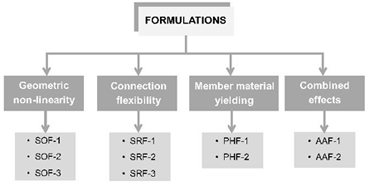
Figure 2: Formulations implemented in the CS-ASA