
| doi:10.3850/978-981-08-6218-3_SS-We005 |
 Final Paper PDF Final Paper PDF
|
FRACTURE FAILURE PREDICTION AND SEISMIC PERFORMANCE EVALUATION OF BUCKLING RESTRAINED BRACES
Heui-Yung Chang1,a, Chai-Rou Tsai1,b, Chih-Yu Wei2,c and Ker-Chun Lin2,d
1Department of Civil and Environmental Engineering, National University of Kaohsiung, Kaohsiung, Taiwan.
ahychang@nuk.edu.tw
bA0955204@mail.nuk.edu.tw
2National Center for Research on Earthquake Engineering, Taipei, Taiwan.
ccywei@ncree.org
dkclin@ncree.org
1. INTRODUCTION
The seismic performance of framed structures and bridges can vary significantly with the adopted energy-dissipation devices. Post-earthquake investigation has shown that the devices can help reduce damage to some extent. However, little information is available for the earthquake retrofitting of structural systems with passive control devices like buckling restrained braces (BRBs). An empirical formula has been proposed to predict the accumulative deformation capacity for BRBs. Such a deterministic model doesn’t provide any information about estimation errors. This has limited the applications of the model. Recently, research efforts have been made to develop a probabilistic model for predicting the failures of BRBs. However, the probabilistic model cannot estimate as well as the deterministic model.
2. PREDICTION MODEL
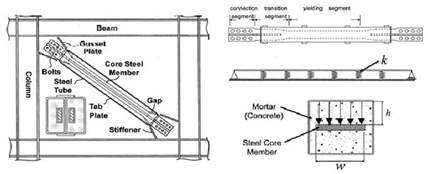
Figure 1: Double-cored BRBs
This study analyzed 26 component tests, in which BRBs were tested until fracture failure, and developed a probabilistic model for predicting the probability of failure for BRBs. In order to reduce the length and the number of bolts in the brace-to-gusset connection, the double-cored buckling restrained braces (DCBRBs) have been developed and extensively tested in National Taiwan University (NTU) and Taiwan National Center for Research on Earthquake Engineering (NCREE) in the past few years (see Figure 1). After going through inelastic excursions, a typical BRB may sustain a total of 262 cycles of fatigue strain on the order of 0.0125 before fracture failure. On the other hand, a similitude law of prefracture hysteresis has been proposed for steel members. In detail, the accumulative plastic deformation capacity of a steel member can be predicted using the number of loading cycles, monotonic and maximum plastic deformation capacity. This study adopted the same approach to establish the failure criterion for BRBs, and assessed the estimation errors (see Figure 2).
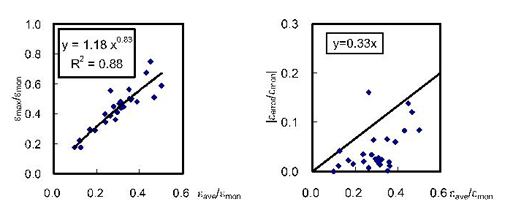
Figure 2: BRB deformation capacity and error estimates
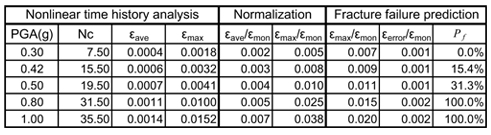
Table 1: Performance evaluation of a BRB
3. APPLICATION
A numerical example was given to illustrate how to predict the probability of failure for the BRB using Figure 2 and Equation (1) (see Table 1). The failure probability of BRBs can be evaluated as follows.

where Pf : probability of failure; Φ-1(·) : inverse function of normal distribution; x : maximum plastic deformation predicted by non-linear time history; x : median estimate of maximum plastic deformation based on component test database; σ : error estimate of x (Refer to Figure 2 for x and σ).
The result shows that BRBs may fail with ductility amplitude smaller than expected. Despite that, there is low probability for BRBs to fail after attacked by a great earthquake. It can also be suggested that after attacked by earthquakes of moderate-to-large scale several times, BRBs may fail in lack of accumulative ductility and need to replace for use in service.