
| doi:10.3850/978-981-08-6218-3_SS-Th014 |
 Final Paper PDF Final Paper PDF
|
REMAINING PRETENSION FORCE IN FRICTION CONNECTIONS
C. Heistermanna, T. Heistermannb and M. Veljkovicc
Division of Structural Engineering — Steel Structures, Luleå University of Technology, Luleå, Sweden.
achristine.heistermann@ltu.se
btim.heistermann@ltu.se
cmilan.veljkovic@ltu.se
EXTENDED ABSTRACT
Two types of tests are performed to quantify the contribution of a certain bolt type and a plate coating on the loss of pretension in a lap joint. The lap joint is used in towers for wind turbines as an economical alternative to flange connections.
Two main variables are considered in the experimental program: the load in the connection and thickness of the primer.
The influence of a tensile load on the joint is experimentally established in long-term tests, where the specimens are left under a stress which is 80 % and 60 % of the static resistance for a period of four months. Ethyl silicate zinc rich paint is a commonly used primer in wind towers and its influence is investigated in so called relaxation tests.
1. INTRODUCTION
The most common way to assemble two sections of a tubular steel tower is with the help of flange connections. Due to various disadvantages of this type of connection it is suggested to be replaced by an alternative option: A high strength friction grip connections (herein after referred to as friction connection) with long open slotted holes. These long slotted holes are cut into the lower tower segment so that the upper segment with standard holes, in which the bolts are already preassembled, can easily be slid on top of the lower one, cp. Figure 1.
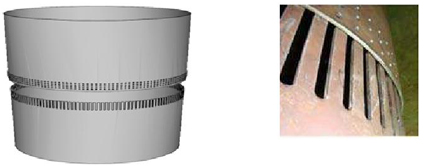
Figure 1: High Strength Friction Grip Connection
2. EXPERIMENTAL SETUP AND CONDITIONS
2.1. General remarks
Within previous experimental work carried out at Luleå University of Technology (LTU) a loss of pretension in bolts of friction connections was monitored. To achieve a better understanding of the influences on this loss of pretension two types of tests are performed, cp. Figure 2. First so called long-term tests are done to examine the behaviour of one segment of a tubular tower high strength friction grip connection under a static load. Then, a number of relaxation tests are carried out to check the influence of the steel plate coating on the loss of pretension. In both specimens the same type of bolt of diameter M30 is tested. It has mechanical properties of high strength bolts and can be regarded as grade 10.9.
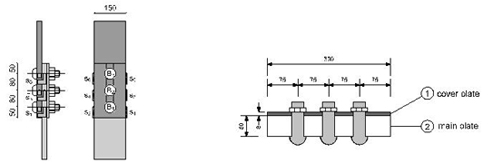
Figure 2: Specimen for long-term tests and for relaxation tests
2.2. Long-term tests
The long term behaviour of friction connections is monitored in period of 4 months. Instead of a complete tower circle a single segment of the joint is tested, represented by a group of three bolts connecting two steel plates. One of them, with normal clearance holes and one of them with a long slotted hole, cp. Figure 2, are first tightened, then kept without any additional loading for 12 hours and afterwards a tensile load is applied to the plates. The external axial loading on the plates corresponds to 80 % and 60 % respectively of the characteristic static resistance of the joint.
2.3. Relaxation tests
The relaxation tests consist of a main plate and a cover plate, which replaces washers. The two plates are jointed by 3 bolts cp. Figure 2. Here, attention is turned to estimate the influence of the surface finishing on the loss of pretension. The surface preparation of the main plate varies between no painting (R0), painting on the top surface (R1) and painting on top and bottom surface (R2). No additional load is applied on the plates.
3. LOSS OF PRETENSION AFTER 20 YEARS
The average losses of pretension for all tests are calculated and extrapolated for a period of 20 years. Comparing the trends for R0, R1 and R2 a clear influence of the surface coating is visible. Specimens in the long-term tests consist of two single plates, so that this ends up with 4 coated surfaces.
From the average losses of pretension for the long-term tests a statistical evaluation according to EN 1990 is done to obtain characteristic values, based on which a tentative recommendation on estimation of the remaining force in the pretensioned bolt is given.
4. CONCLUSIONS
The performed tests lead to the following conclusions about the reduction of forces in pretensioned bolts:
1. A load applied on a joint with pretensioned bolts does not increase the loss of pretension siginifcantly.
2. A coating on the surfaces of the jointed plates increases the loss of pretension, which means that the losses of pretension over time can by quantified depending on the number of coated plate surfaces.