
| doi:10.3850/978-981-08-6218-3_CC-Th037 |
 Final Paper PDF Final Paper PDF
|
NONLINEAR ANALYSIS OF COMPOSITE STEEL-CONCRETE BEAMS UNDER COMBINED BENDING AND TORSION INCORPORATING THE EFFECTS OF PARTIAL SHEAR CONNECTION
E. L. Tana and B. Uyb
School of Engineering, University of Western Sydney, Penrith, NSW.
ae.tan@uws.edu.au
bb.uy@uws.edu.au
EXTENDED ABSTRACT
This paper investigates the behaviour of composite steel-concrete beams under combined flexure and torsion incorporating the effects of partial shear connection by using the finite element analysis method. 3-D finite element models have been developed to account for the geometric and nonlinear behaviour of the materials. This model is then verified by experimental test results. The model shows that there is an increase in torsional capacity in the presence of flexure but the flexural capacity remains the same in the presence of torsion. A parametric study has been carried out and showed similar trends even with an increase in span length and an increase in the ratio of torsional capacity when the span increases.
1. INTRODUCTION
Composite steel-concrete construction has been widely used around the world. Techniques for the ultimate load analysis and design of composite steel-concrete beams are wellestablished and solutions can be obtained with relative ease. However, beams under combined actions such as edge or curved in plan beams subjected to torsion and bending can be difficult to ascertain their strengths and behaviour due to their complex stress state. These effects of combined actions are not currently addressed in the Australian Standard AS 2327.1 [1] or any international codes.
2. FINITE ELEMENT MODELS
Using a commercial package ABAQUS [2], finite element models were modelled based on the geometry of test specimens from Tan and Uy [3]. Six composite beams CBF-1, 2, 3 and CBP-1, 2, 3 were tested under combined flexure and torsion. The models were verified with the experimental results and showed good agreement in Table 1.
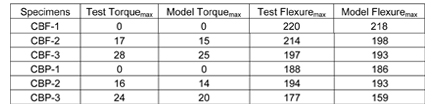
Table 1: Comparison of ultimate strength between experimental tests and finite element models
3. PARAMETRIC STUDY
A parametric study was then conducted to investigate the behaviour of the beams with an increase in beam span length. From Figure 1, composite steel-concrete beams have shown an increase in the torsional and flexural capacities with the increase in span length. Additionally, the benefit for the torsional strength also increases with span length.
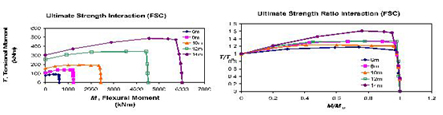
Figure 1: Ultimate strength for composite steel-concrete beams with full shear connection
4. CONCLUSIONS
In conclusion, this paper has shown that finite element models using ABAQUS have proven to be in good agreement with experimental results from Tan and Uy [3]. From the parametric study, it is observed there is an increase in torsional and flexural capacities with the increase in span length. The benefit for the torsional strength also increases with span length as shown in the ultimate strength ratio interaction curves.
5. REFERENCES
[1] Standards Australia: Australian Standards AS 2327.1–2003 Composite structures, Part 1: Simply supported beams; Standards Australia International Ltd, 2003.
[2] ABAQUS Standards User’s Manual, Version 6.7 USA: Hibbitt, Karlsson and Sorensen, 2007.
[3] Tan E.L., Uy B.: Experimental study on straight composite beams subjected to combined flexure and torsion, Journal of Constructional Steel Research, Vol. 65, pp. 784–793 (2009).