
| doi:10.3850/978-981-08-6218-3_BUS-Th010 |
 Final Paper PDF Final Paper PDF
|
POST-EARTHQUAKE EXPERIMENTAL DYNAMIC IDENTIFICATION AND STRUCTURAL ASSESSMENT OF A PUBLIC STEEL BUILDING IN L’AQUILA
G. Fabbrocino1,a, C. Rainieri1,b, C. Laorenza1,c, A. Di Carluccio1,d, M. Dolce2 and G. Manfredi3
1Structural and Geotechnical Dynamics Lab, Department SAVA, University of Molise, Termoli (Cb), Italy.
agiovanni.fabbrocino@unimol.it
bcarlo.rainieri@unimol.it
ccarmine.laorenza@unimol.it
dantonio.dicarluccio@unimol.it
2Department of Italian Civil Protection, Seismic Risk Office, Via Vitorchiano 4, 00189,Roma, Italy.
mauro.dolce@protezionecivile.it
3University of Naples Federico II, Department of Structural Engineering, Napoli, Italy.
gamanfre@unina.it
EXTENDED ABSTRACT
Seismic vulnerability assessment of existing constructions is a key issue for seismic engineering, in particular for existing buildings with public functions. An accurate evaluation of seismic vulnerability for a certain construction can be achieved by numerical simulations. However, reliability of analyses is influenced by the level of knowledge in the case of existing buildings. If the level of knowledge is not accurate, results are affected by uncertainties at a higher degree. In particular, the numerical evaluation of the dynamic behavior of large civil structures is usually affected by a number of uncertainties. Dynamic properties computed by Finite Element (FE) analysis can differ from the actual dynamic properties of the structure. This can be addressed to several factors: first of all, FE analysis is based on a discretization of reality, and the displacement fields are approximated by predefined shape functions within each element; moreover, some simplified modeling assumption such as mass lumping or rigid diaphragm can cause scatter with respect to the actual behavior. Damping is another source of uncertainty. Finally, the actual geometry of the structure can be somewhat different from that one used for the FE model. Moreover, environmental factors and structural deterioration due to ageing or hazardous natural events (such as earthquakes) affect the values of modal parameters, as well.
For such reasons, an improved knowledge of the dynamic behavior of existing civil structures can be obtained only through execution of full scale dynamic tests. However, for large civil structures, application of techniques based on application of a known input to the structure under investigation suffers some drawbacks. In fact, in some cases it is very difficult or even impossible to provide adequate excitation, so that background loading like wind or traffic is small if compared to the response from the artificial loading; even in the case where this is possible, problems may arise due to non-linearities introduced by exciting the structure to a higher response level. Moreover, artificial loading is usually expensive and affected by the risk of damaging the structure. Thus, Operational Modal Analysis techniques are spreading within the scientific and technical community for characterization of modal properties of structures. They are based only on measurement of the structural response to ambient vibrations, thus overcoming the issues concerning input control. However, very sensitive equipment and careful data analysis are needed.
In the present paper, the main aspects related to the dynamic identification through Operational Modal Analysis (OMA) of a large steel building are reviewed. It belongs to a block of buildings identified as “D” (Figure 1) in the area of the Guardia di Finanza Non- Commissioned Officers’ School “V. Giudice” in Coppito, L’Aquila, Italy. The block is made by four jointed structures. Each steel structure consists of three levels with dimensions of 62 m by 63 m. On the first level there are offices and services while on the second one there is the cookhouse. The third level is represented by the roof. The structure consists of 11 frames along x direction and 5 frames in y direction. Resistance to horizontal forces is ensured by the presence of some bracing systems. Nearly all steel columns have a circular cross section, with few exceptions.
According to information provided by original design drawings and results of in-.situ survey, a FE model of the structure has been implemented. Then, output-only modal identification tests have been carried out in order to identify the actual dynamic parameters of the structure in its operational conditions and check the correlation between experimental and numerical results.
Dynamic tests were carried during the seismic crisis in Abruzzo, April 2009. The work herein described is a part of an extended experimental campaign carried out under the coordination of the Italian Civil Protection In particular, an extensive dynamic characterization of the constructions has been carried out to support inspections and provide information to the Civil Protection during post-mainshock emergency management of buildings and implementation of permanent monitoring systems. The description of such a complex activity is not however reported. Availability of experimental results represents a fundamental aid for accurate implementation and refinement of numerical models.
In the present paper, after a short description of the tested building, details about test execution are given and the main identification results are illustrated. Furthermore, some results of the numerical modelling of the structure are reported and compared with experimental outcomes.
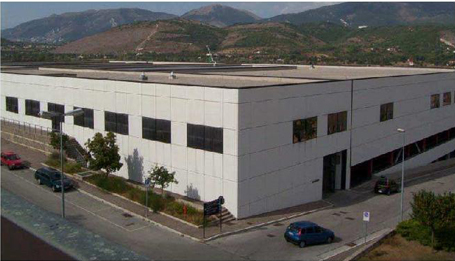
Figure 1: Block A of the School of Guardia di Finanza in Coppito (L’Aquila)